

Winner: 2016’s Blog of the Year #10!
So this week we know two things: our Dominant Negative Emotion and our Dominant Positive Emotion. Your mind has lots of things wired into those two emotions and so those are the ones to which you have the most effective route. Your brain’s like that–the more you do of something the better it gets at it.


And let’s say the enjoyable thing you can easily experience is compassion. You can be having a terrible day–be all caught up in your own egotistical suffering and then you can see an injured dog being rescued on social media and suddenly you’ve switched from anxiety about your future to a form of caring love for the animal and thoughts instead about its future. You’re so invested in the animal that you’re not even creating a you to do any suffering.
This example works particularly well because compassion is tied to someone else’s suffering. For your mind, it’s not a giant leap to stay in suffering mode and yet focus on someone else. That once-removed understanding of the pain is the same thing that makes watching suffering in a movie actually resonate. It’s not your pain, but you feel it as pain you personally understand.


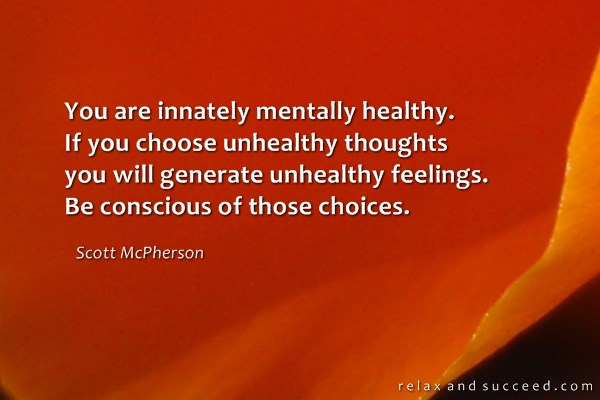
You can’t blame people a few years ago for thinking this was crazy. Common belief in psychology was that it worked the other way around. Your mental health affected your thinking, not that your thinking affected your mental health. Now they’re old fashioned if they think that people are victims. We can’t out-victim people who went through the worst of WWII, so if they can still have fruitful lives so can anyone else. It’s a matter of understanding our choices. It’s a matter of valuing this awesome opportunity called life.
Remember, because you have a preference for an experience that feels good that does not mean that the undesirable emotions and experiences are incorrect or otherwise something to remove from your life. You want to learn to spend the least amount of time there possible, but there is still tremendous value in the contrast that negative experiences provide.
These are not small steps you’re taking every day. It’s you learning to see the world in a different way. If we do this long enough you’ll not only have the benefit of each lesson, but you’ll also have the larger total benefit of having assumed as natural, an entirely new way of seeing the world. A way so comfortable it can eventually replace the flawed version of reality you’re struggling to manage today.
That’s your assignment: watch your two biggest emotions. See how they each rise within you. Wonder about those sources. You’re wiser than you think. If you’re sincerely doing the exercises you’re likely to have a very helpful insight about how you can be more peaceful with yourself. It’s those little a-ha moments that we’ll stitch together into a new understanding. It’ll be fun. See you tomorrow for the act of the switch.
peace. s
Scott McPherson is an Edmonton-based writer, public speaker, and mindfulness facilitator who works with individuals, companies and non-profit organizations around the world.


I help people achieve better mental health by teaching them about reality.